
Adventure Travel
Whitewater Rafting Trips Worth Building Your Summer Around
Five US whitewater trips worth planning a summer around are the Upper New River Gorge in West Virginia (Class I-III, family-friendly), the Arkansas River near Buena Vista and Salida, Colorado (Class II-IV, $95-170), the multi-day Middle Fork of the Salmon in Idaho's Frank Church Wilderness (permit lottery Dec 1-Jan 31), the undammed Chattooga River on the Georgia-South Carolina line (Section IV's Five Falls), and the South Fork American River near Sacramento, California (Class III, $130-170/day).
There's a specific kind of relief only cold river water delivers in July. The heat breaks the second the raft drops into the first rapid, spray hits your face, and for a few seconds you genuinely forget what month it is. Summer is whitewater season nationwide: snowmelt has settled into a dependable flow, outfitters are running full crews, and long daylight hours mean an afternoon on the water can slide into an evening campfire before anyone checks a watch. These five trips are worth arranging a summer around, each for its own reason.
The New River Gorge, West Virginia
The Gauley gets the September reputation, and rightly so: the Army Corps of Engineers releases water from Summersville Dam across 22 scheduled days each fall (this year, September 11 through October 17), sending roughly 2,800 cubic feet per second downstream for serious boaters to plan a whole vacation around. But the Upper New runs all summer on its own, no dam favors needed, and it's the smarter call if you're not chasing Class V. This stretch holds Class I-III water through a gorge thick with hardwood forest, mellow enough that outfitters take rafters as young as six. Fayette Station, the named rapid just above the take-out, looks like a simple wave train from shore and feels like something else entirely once you're in it, especially at higher flows when the first wave hides the drop until you're already committed. Float underneath the New River Gorge Bridge, 876 feet overhead, and the trip suddenly feels smaller than it did a minute ago.
Best local stop: Bridge Brew Works, a few minutes outside downtown Fayetteville, runs an open-air taproom from April through early December, and the firepit gets plenty of use once the wetsuits come off.
The Arkansas River, Colorado
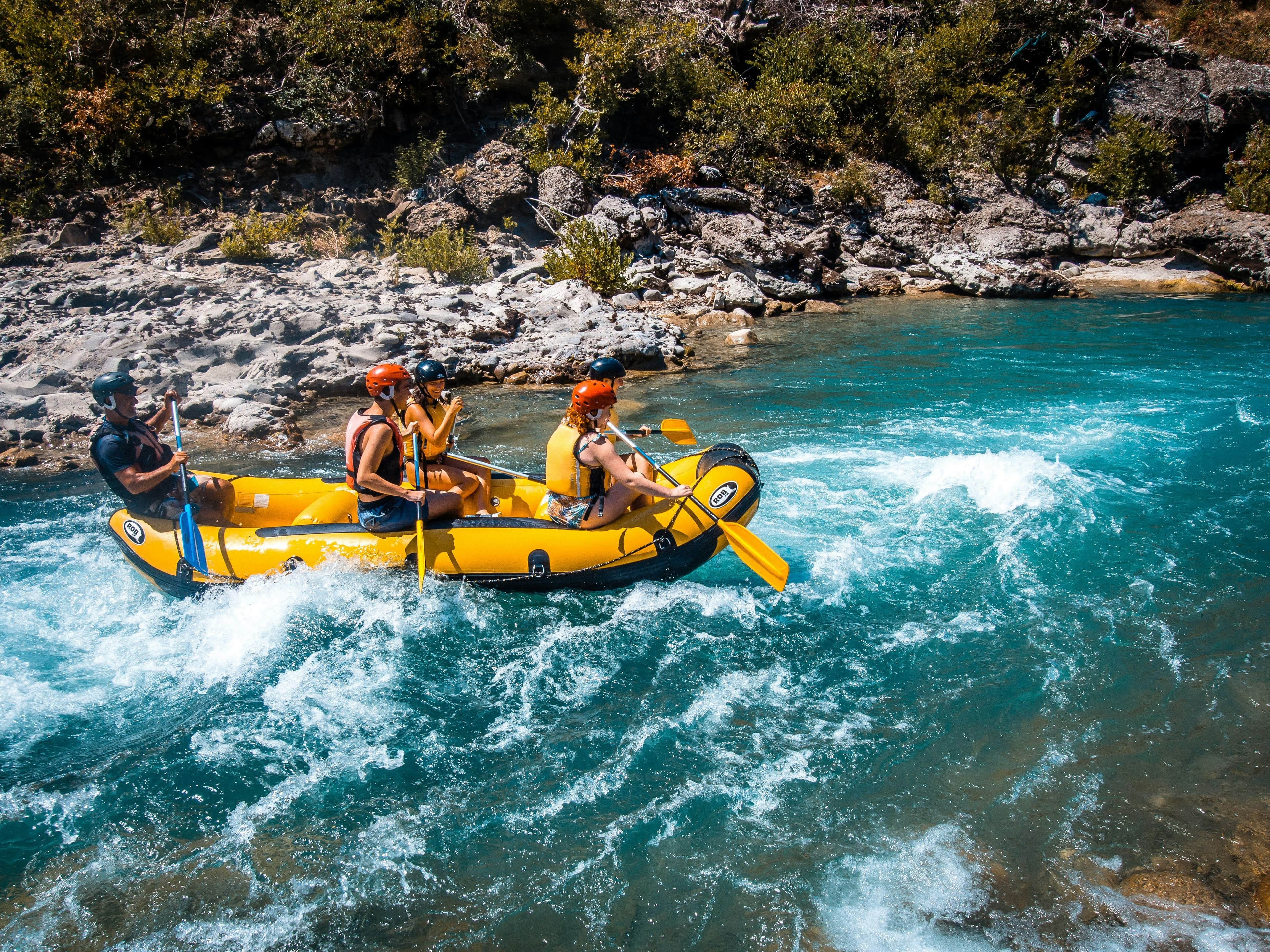
No river in the country makes rafting quite this convenient. US Highway 50 tracks the Arkansas for miles, and outfitters based in Buena Vista and Salida can have you on the water within minutes of checking in. Browns Canyon National Monument holds the marquee Class III-IV water, while Bighorn Sheep Canyon downstream, an 8.7-mile run between the Pinnacle Rock and Parkdale recreation sites around highway mile markers 100 to 119, offers a gentler Class II-III float better suited to families. Mornings stay cool even in August since you're rafting close to 9,000 feet, the water straight off Rocky Mountain snowpack. A half-day trip runs around $95 to $115 depending on outfitter and crowds; add lunch and a second run and a full day pushes past $150. Salida's downtown, thick with galleries and patio breweries, makes an easy landing spot once you're dry again.
The Middle Fork of the Salmon, Idaho
For travelers with a week to spare instead of an afternoon, the Middle Fork of the Salmon reorders your priorities. Multi-day trips run through the Frank Church-River of No Return Wilderness, one of the largest roadless areas in the Lower 48, during a control season the Forest Service sets from May 28 through September 3. Getting a permit is its own project: the lottery opens December 1 and closes January 31, with results out by February 14, which is why most first-timers book through an outfitter holding its own permits rather than gamble on the draw. Days blend rapids with lazy float sections and camp dinners cooked as the canyon walls turn red at dusk.
Hidden gem: Sunflower hot spring, around river mile 32.6, seeps straight out of the bank and holds enough people to make it a real stop rather than a photo op, especially after a cold morning rapid.
The Chattooga River, Georgia and South Carolina
The Chattooga still runs wild and undammed along the Georgia-South Carolina line, meaning that unlike nearly everything else on this list, nobody is releasing water on a schedule. Rain decides when it runs. Section IV carries the drama: five named rapids back to back, the Five Falls, starting with Entrance and building through Corkscrew, Crack-in-the-Rock (which most guides portage around rather than run), Jawbone, and finally Sock-em-Dog. Bull Sluice, just upstream, marks where Section III ends and the real commitment begins. It demands a certified outfitter and a healthy respect for moving water, though the gentler stretches below suit anyone chasing scenery over adrenaline.
The American River, California
An hour from Sacramento, the South Fork of the American River might be the most forgiving whitewater in the West, exactly why it's become the default weekend trip for Bay Area residents escaping the heat. The Chili Bar run covers eight miles and a string of Class III rapids with names that oversell the danger just a little, Meatgrinder, Triple Threat, and Troublemaker among them, though Troublemaker bites harder in spring when flows spike past 6,000 cubic feet per second. Most summer trips run closer to 1,500 to 1,800 cfs, lively without punishing anyone. Expect to pay $130 to $170 per person for a full day, more on summer weekends. The float passes Coloma and the Marshall Gold Discovery site, where gold turned up in the tailrace in January 1848 and rewrote the state's trajectory within a year.
What ties these rivers together isn't difficulty or scenery so much as timing. Summer is the one season when snowmelt, warm air, and open outfitter schedules line up at once, and the number on a rapid's rating matters less than showing up while the water is actually running. Pick one, book the guide, check the release calendar if there is one, and let the current set the pace for a few days.
Places in this story
- New River Gorge
- Gauley River
- Summersville Dam
- Upper New River
- Fayette Station
- New River Gorge Bridge
- Fayetteville
- Bridge Brew Works
- Arkansas River
- US Highway 50
- Buena Vista
- Salida
Frequently asked questions
- When does the Gauley River release water for rafting?
- The Army Corps of Engineers releases water from Summersville Dam across 22 scheduled days each fall, this year September 11 through October 17, sending roughly 2,800 cubic feet per second downstream.
- Is the New River Gorge good for beginners or families?
- Yes, the Upper New runs Class I-III water through the gorge all summer without needing a dam release, and it's mellow enough that outfitters take rafters as young as six.
- How do you get a permit to raft the Middle Fork of the Salmon?
- The permit lottery opens December 1 and closes January 31, with results out by February 14. Most first-timers book through an outfitter that holds its own permits rather than gamble on the draw.
- What are the named rapids on the Chattooga River's Section IV?
- Section IV's Five Falls run five named rapids back to back: Entrance, Corkscrew, Crack-in-the-Rock (which most guides portage around), Jawbone, and finally Sock-em-Dog, with Bull Sluice marking the start of the real commitment upstream.
- How much does whitewater rafting cost on the Arkansas or American rivers?
- On the Arkansas River in Colorado, a half-day trip runs about $95 to $115, with a full day plus lunch pushing past $150. On California's South Fork American River, a full day runs $130 to $170 per person, more on summer weekends.