
Historic & Cultural Travel
Historic Lighthouses Worth Visiting This Summer
Cape Hatteras Lighthouse is closed to climbers all of 2026 for restoration, so this summer's best lighthouse options are Bodie Island Lighthouse in North Carolina (reopened April 22, $10 adult tickets via recreation.gov), Portland Head Light in Maine (guided tour only, tower opens once a year in September), Split Rock Lighthouse in Minnesota ($15 full ticket), Point Reyes Lighthouse in California (Thursday-Monday only, 300-plus steps), and St. Augustine Lighthouse in Florida (219 self-guided steps, $12.95 adults).
Historic Lighthouses Worth Visiting This Summer
Long summer evenings were built for lighthouses, but here's the complication nobody warns you about: the marquee name on most people's list is unclimbable right now. Cape Hatteras Lighthouse, the striped giant every Outer Banks itinerary leads with, has been closed to climbers for all of 2026 while restoration work continues. So this isn't just five towers worth a detour, it's five towers worth a detour once you know which ones will actually let you in. Pack sunscreen, water, and shoes you don't mind wearing on several hundred steps, because three of these five demand a real climb before they hand over the view.
Maine's Rocky Crown: Portland Head Light
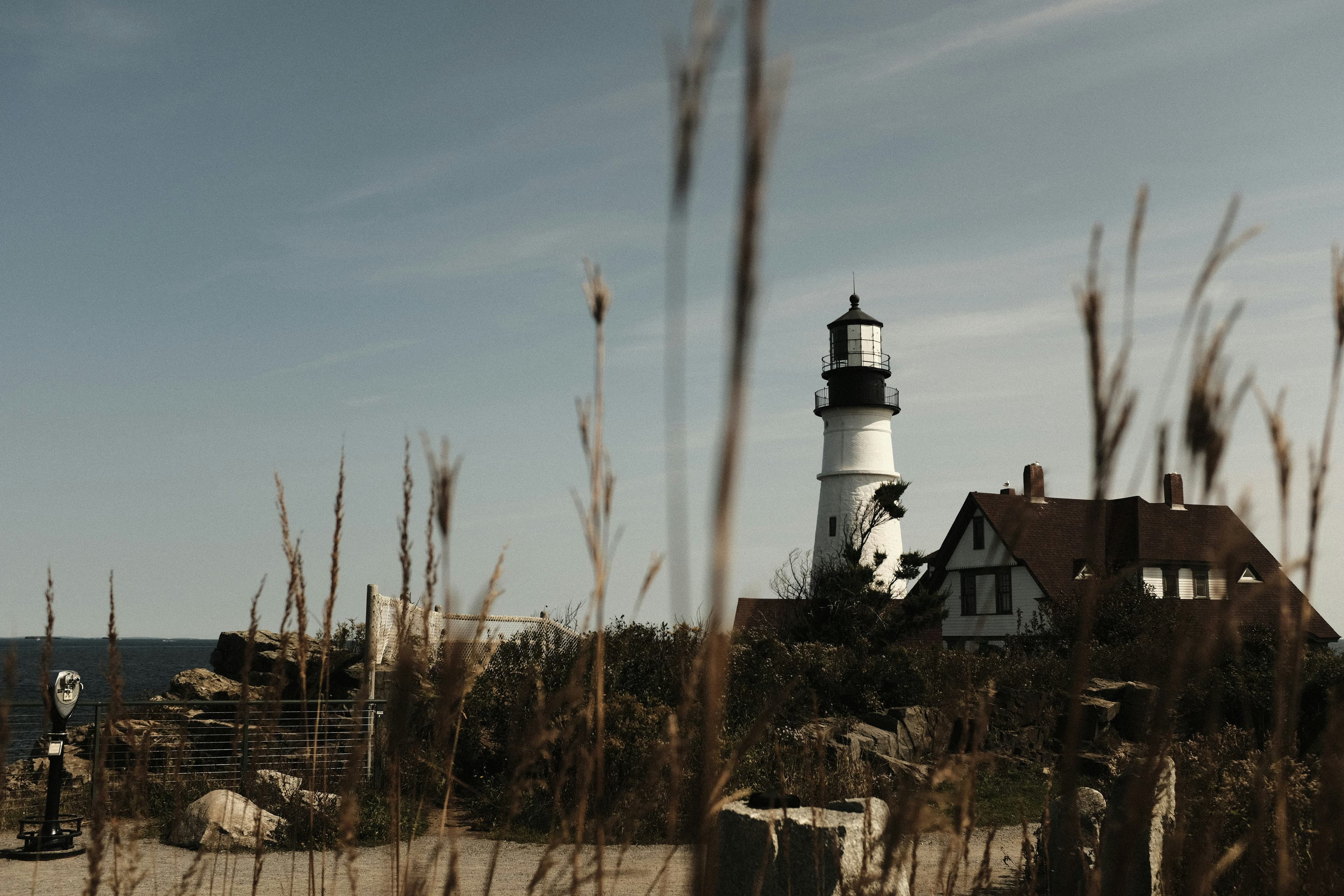
Commissioned in 1791 under George Washington, Portland Head Light was the first lighthouse the young federal government ever completed, and it still looks the part: whitewashed and trim against the dark granite of Cape Elizabeth. Most first-time visitors assume they can climb it. They can't, at least not on a normal summer day. The tower opens to the public exactly once a year, during Maine Open Lighthouse Day each September. What you get instead, from mid-May through mid-October, is a free 40-minute walking tour that park staff lead daily at 3 p.m., capped at 30 people on a first-come basis, tracing the old fort's gun batteries and the coastline's long history of wrecks. The keeper's quarters now house a small museum that fills in the rest.
Best local stop: a lobster roll cart near the park's Shore Road entrance, eaten on the rocks while the light starts its work over Casco Bay.
The Outer Banks: Skip Hatteras, Climb Bodie Island Instead
Cape Hatteras Lighthouse still rises 198 feet over the sand that earned this stretch its nickname, the Graveyard of the Atlantic, and it is still the tallest brick lighthouse in North America. What it is not, this year, is open. The Park Service shut the tower to climbers for the entire 2026 season for restoration; the grounds around it stay open around the clock, but the stairs don't. The better plan is to drive up to Bodie Island Lighthouse, which reopened for climbing on April 22 after its own restoration wrapped. Tickets are sold same-day only, starting at 7 a.m. through recreation.gov, $10 for adults and $5 for kids, seniors, and visitors with disabilities. Only one person is allowed on each flight of stairs at a time, so the climb never turns into a shuffle.
Quieter alternative: Ocracoke Lighthouse, the oldest continuously operating light in North Carolina, dating to 1823, where nobody is in a hurry about anything.
Great Lakes Grandeur: Split Rock Lighthouse, Minnesota
Built in 1910 after a single November storm wrecked or grounded nearly 30 ships on Lake Superior in 1905, Split Rock's 54-foot tower sits atop a 130-foot cliff that does most of the visual work. A full tower-and-museum ticket runs $15; an $8 grounds pass still gets you the visitor center and the fog signal building without the line. Bring a jacket regardless of the forecast. Even in July, the water along this stretch of the North Shore rarely climbs out of the mid-50s, which is a fact the lake enforces regardless of how hot the parking lot feels. For trails, the paved Gitchi-Gami State Trail runs a 17-mile stretch from Gooseberry Falls to Silver Bay right through the park, while the shorter Day Hill Loop, about 3.5 miles with roughly 450 feet of climbing, is the one locals actually recommend for the view back at the lighthouse.
California's Fog Line: Point Reyes Lighthouse
Built low and close to the cliff to duck under the near-constant summer fog, this squat lighthouse sits at the bottom of more than 300 steps, and the descent is the easy part. The visitor center and the stairs themselves are only open Thursday through Monday, 10 a.m. to 4 p.m., closed Tuesdays and Wednesdays entirely, and staff shut the stairs outright whenever gusts top 40 miles an hour, which happens more often than the brochures let on. One correction worth making here: don't come expecting whales in July. The gray whale migration runs roughly December through May, with the last northbound mothers and calves passing in late April, so by summer the water off the point is quieter. What's left are harbor seals hauled out on the rocks below and, a short drive north, the elk herd at Tomales Point.
Best local stop: Drakes Beach, a sheltered cove to retreat to once the lighthouse wind gets to be too much.
Florida's Warm Water Watchtower: St. Augustine Lighthouse
The current black-and-white tower has stood over the Matanzas River since 1874, and it keeps generous hours for a historic site, open daily 9 a.m. to 6 p.m. The climb is 219 steps, self-guided, and open to anyone at least 44 inches tall who can manage the stairs unassisted. Adult tickets run $12.95, seniors 60 and up pay $10.95, and the on-site maritime museum, housed in the restored keeper's dwelling, is worth the extra half hour of air conditioning during the worst of the midday heat. Afterward, the Atlantic nearby stays warm enough to swim well past sunset, which is more than you can say for Lake Superior.
Lighthouses were never built for beauty, only for warning ships away from rock and sand, and yet they've become some of the most photographed structures in the country anyway. The real lesson of this particular summer is a practical one: call ahead, or at least check the park's website, because restoration schedules and wind closures don't care about your itinerary. Hatteras will reopen eventually. Until then, the coastline itself, cold or warm, foggy or blazing, is still the actual destination. The keepers are long gone, but the climbs, the stairs, and the views from underneath them remain exactly as worth the effort as they ever were.
Places in this story
- Cape Hatteras Lighthouse
- Outer Banks
- Graveyard of the Atlantic
- Bodie Island Lighthouse
- Ocracoke Lighthouse
- Portland Head Light
- Cape Elizabeth
- Casco Bay
- Shore Road
- Split Rock Lighthouse
- Lake Superior
- North Shore
Frequently asked questions
- Is Cape Hatteras Lighthouse open for climbing in 2026?
- No. The National Park Service closed Cape Hatteras Lighthouse to climbers for all of 2026 while restoration work continues, though the surrounding grounds remain open around the clock.
- Can you still climb Portland Head Light in Maine?
- Not on a normal day. The tower only opens to the public once a year during Maine Open Lighthouse Day each September; otherwise, visitors get a free 40-minute walking tour led by park staff daily at 3 p.m. from mid-May through mid-October, capped at 30 people.
- How do you get tickets to climb Bodie Island Lighthouse?
- Bodie Island Lighthouse reopened for climbing on April 22 after its own restoration. Tickets are sold same-day only starting at 7 a.m. through recreation.gov, priced at $10 for adults and $5 for kids, seniors, and visitors with disabilities.
- Can you see whales from Point Reyes Lighthouse in the summer?
- No. The gray whale migration runs roughly December through May, with the last northbound mothers and calves passing in late April, so by summer visitors instead see harbor seals on the rocks and the elk herd at nearby Tomales Point.
- How many steps is the climb at St. Augustine Lighthouse, and how much does it cost?
- The climb is 219 self-guided steps, open to anyone at least 44 inches tall who can manage stairs unassisted. Adult tickets are $12.95 and seniors 60 and up pay $10.95.