
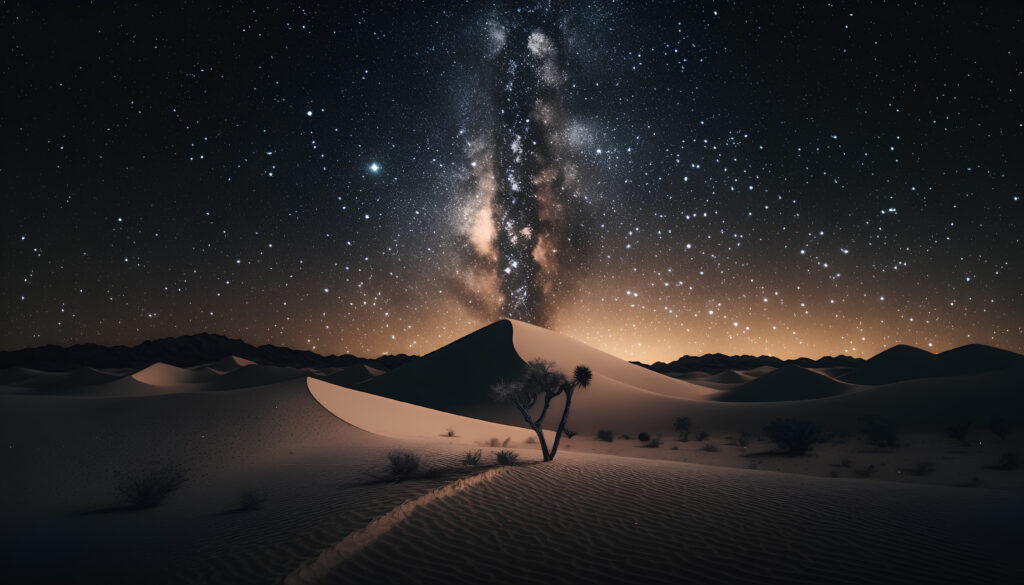
I turned off the headlamp and waited for my eyes to adjust. It took about 20 minutes. Then the sky above Cherry Springs State Park in northern Pennsylvania did something I had never seen it do: it revealed itself. The Milky Way was not a faint smudge but a structural feature of the sky, a dense river of light with visible dust lanes and individual star clouds. I could see my shadow cast by starlight. No moon. No light pollution. Just the universe, unhidden for the first time in my adult life.
Winter is the best season for stargazing in America. The air is drier, turbulence is lower, nights are longer, and the major winter constellations (Orion, Taurus, Gemini, Canis Major) are among the brightest in the sky. Combined with a certified Dark Sky location, the difference between winter stargazing here and looking up from your backyard is the difference between watching a movie on your phone and seeing it in IMAX.
What Is a Certified Dark Sky Destination?
The International Dark-Sky Association (DarkSky International as of 2023) certifies locations that meet rigorous criteria for darkness, light pollution control, and public access. As of 2025, there are over 200 certified Dark Sky Places worldwide, with the United States holding the majority. Certification levels include Dark Sky Parks, Reserves, Sanctuaries, and Communities. A certified Dark Sky Park has measurable sky quality (typically a Bortle Class 1 or 2, where 1 is the darkest possible sky and 9 is a light-polluted city center).
Cherry Springs State Park, Pennsylvania
Cherry Springs, at 2,300 feet in the Susquehannock State Forest, is the gold standard for East Coast stargazing. It holds Gold-tier International Dark Sky Park status, making it one of the darkest publicly accessible places east of the Mississippi. The Astronomy Observation Field is a dedicated 8-acre clearing with 180-degree unobstructed horizons. Red-filtered lights only. No white flashlights.
Winter access requires preparation. The park is open year-round, but the access road can be snow-covered and icy from December through March. Four-wheel drive is strongly recommended. No camping water in winter (pit toilets remain available). The nearest services (gas, food, lodging) are in Coudersport, about 12 miles west. Night Sky Programs led by park staff run spring through fall, but winter is often the clearest season for self-guided observing. Free admission.
Natural Bridges National Monument, Utah
Natural Bridges was the world’s first certified International Dark Sky Park in 2007, and it remains among the darkest. Located in southeastern Utah near Blanding, the park protects three massive natural stone bridges. At night, the Bortle Class 2 skies reveal the zodiacal light (a faint cone of light along the ecliptic visible only from the darkest locations) and the Gegenschein (a subtle brightening directly opposite the sun).
Winter nights here can drop to single digits. The 9-mile Bridge View Drive is typically open year-round but may close temporarily after heavy snowfall. The Owachomo Bridge viewpoint is the most accessible for stargazing. Entrance fee $20 per vehicle, valid 7 days. No lodging inside the park. Blanding (45 minutes) and Moab (2 hours) are the nearest towns with services.
Big Bend National Park, Texas
Big Bend’s remoteness (the nearest town with a traffic light is over 100 miles away) gives it some of the darkest skies in the contiguous United States. The Chisos Basin, at 5,400 feet elevation, offers winter temperatures that are cold but manageable (30s to 50s). The park holds Gold-tier Dark Sky status and runs ranger-led stargazing programs at the amphitheater near the Chisos Mountains Lodge (check the park calendar for winter dates).
Winter is Big Bend’s most comfortable hiking season. The South Rim Trail (14.5 miles round trip) and Window Trail (5.6 miles) are ideal in cooler weather. The park’s location at latitude 29 degrees North means you can see deep-sky objects that are invisible from northern observatories, including constellations like Carina and Puppis that barely clear the horizon above the border. Entrance fee $30 per vehicle.
Death Valley National Park, California
Death Valley holds the record for the hottest temperature ever reliably recorded on Earth (134 degrees in 1913), which makes winter its prime season. December through February brings daytime highs of 60 to 70 degrees, cool nights in the 30s and 40s, and some of the clearest air in North America. The park earned Gold-tier Dark Sky certification in 2023.
The Harmony Borax Works parking area and Badwater Road pullouts are popular stargazing locations, offering low horizons and minimal terrain obstruction. The Furnace Creek Visitor Center occasionally hosts night sky programs (check the NPS calendar). Zabriskie Point, famous for its sunrise views, doubles as an excellent stargazing platform with a 360-degree horizon. Entrance fee $30 per vehicle.
Headlands International Dark Sky Park, Michigan
Headlands, on the northern tip of Michigan’s Lower Peninsula near Mackinaw City, is one of only six Gold-tier Dark Sky Parks in the world that is completely free and open to the public 365 days a year. The park sits on the shore of the Straits of Mackinac, where Lakes Michigan and Huron meet. The Dark Sky Discovery Center hosts programs and has heated indoor viewing areas with skylights, which is a serious benefit when it is 5 degrees outside.
Winter brings potential aurora borealis viewing at this latitude (45.8 degrees North). The park’s unobstructed northern horizon over Lake Michigan is ideal for catching the northern lights when solar activity cooperates. Dress for extreme cold. Wind off the lake is merciless. The park is 10 minutes from Mackinaw City, which has year-round lodging and restaurants.
Cosmic Campground, New Mexico
Cosmic Campground, in the Gila National Forest of southwestern New Mexico, was the first site in the United States designated as a Dark Sky Sanctuary, the highest level of certification. It is among the darkest measured locations on the planet. The campground has nine primitive sites (no water, no electricity, vault toilets). First-come, first-served. Free.
Getting there requires commitment: the campground is 9 miles down a rough dirt road from Highway 180, about an hour northeast of Silver City. Winter road conditions vary. The reward is a sky so dark that the Milky Way casts visible shadows and the Andromeda Galaxy appears as a distinct smudge to the naked eye. This is not a casual stop. It is a pilgrimage.
Practical Tips for Winter Stargazing
Let your eyes fully adapt to darkness for at least 20 minutes. Use only red-filtered light (tape red cellophane over a flashlight or use a headlamp with a red mode). Dress warmer than you think necessary. Standing still in cold air for an hour or more drops your core temperature faster than hiking. A camp chair, sleeping bag, and thermos of hot liquid make the difference between 20 minutes of looking up and a full night of observing.
Check the moon phase before planning a trip. A full moon washes out all but the brightest stars. The best stargazing falls within five days of a new moon. The Photographer’s Ephemeris and Stellarium apps both show moon phases and rise/set times for any location. Winter 2026 new moon dates include January 29, February 27, and March 29.
Frequently Asked Questions
Do I need a telescope for dark sky stargazing?
No. The naked eye at a certified Dark Sky location reveals dramatically more than a telescope in a light-polluted area. Binoculars (10×50 or 10×42) are the best first upgrade, revealing star clusters, nebulae, and the Andromeda Galaxy in detail. A telescope is wonderful but not required for a transformative experience.
Which dark sky destination is easiest to access in winter?
Headlands in Michigan is the most accessible: free, open year-round, heated viewing center, 10 minutes from a town with lodging. Death Valley is the warmest and most comfortable for extended nighttime observing.
Can I see the northern lights from these locations?
Headlands in Michigan and Cherry Springs in Pennsylvania are at latitudes where aurora borealis is occasionally visible during strong geomagnetic storms. It is not guaranteed. Subscribe to NOAA’s Space Weather Prediction Center alerts for advance notice of aurora-favorable conditions.