
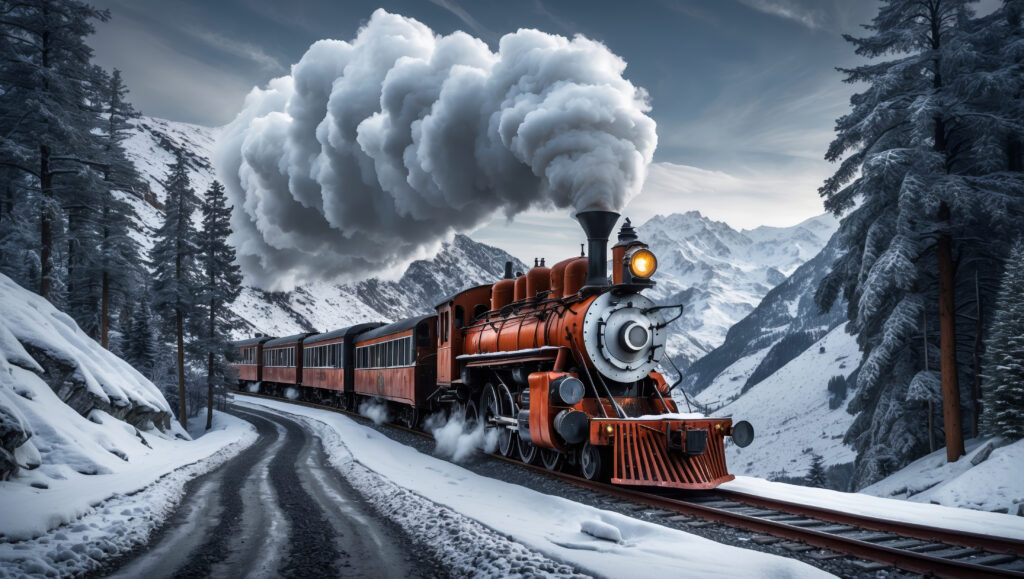
The Durango & Silverton Narrow Gauge Railroad pulled out of the station at 9:15 AM on a Saturday in mid-December. The coal-fired steam engine, built in 1925, chugged and hissed through downtown Durango, past the Animas River, and into a canyon that narrowed until the track hugged a ledge 400 feet above the water. Snow covered the San Juan Mountains on both sides. Smoke from the engine curled against the granite walls. A child in the car behind me pressed his face against the glass and said, very quietly, ‘This is real.’
Winter train travel strips American rail journeys down to their essentials: landscape, motion, and the mechanical poetry of a machine carrying you through terrain you could never reach by car. Some of these routes have operated since the 1800s. Others are modern Amtrak routes that happen to cross the country’s most spectacular winter scenery. All of them make the journey the destination.
Durango & Silverton Narrow Gauge Railroad, Colorado
The Durango & Silverton runs on 45 miles of track laid in 1882 to haul silver ore from the San Juan Mountains. In winter, the railroad operates a shortened route: the Cascade Canyon Express, running approximately 26 miles from Durango to Cascade Canyon and back, typically on weekends from late November through early May. The trip takes about 3.5 hours. Heated coaches are available, though the open-air gondola (for the committed) puts you in the elements.
The Polar Express experience runs select dates in November and December, with hot chocolate, storytelling, and a visit from Santa. It sells out months ahead. Tickets for the Cascade Canyon winter train start around $99 for adults in standard coach. The Durango depot is the starting point, and the town itself has excellent winter dining and craft breweries.
Grand Canyon Railway, Williams, Arizona
The Grand Canyon Railway runs 65 miles from Williams, Arizona, to the South Rim of the Grand Canyon, a route that has operated since 1901. In winter, the train departs daily at 9:30 AM and arrives at the Grand Canyon Depot (the only active log depot in the country) at 11:45 AM. Return departs at 3:30 PM. Round trip tickets start around $67 for adults in coach class, with upgrades to first class (complimentary drinks and snacks) and luxury dome car available.
The winter ride crosses high desert and ponderosa pine forest at roughly 6,000 to 7,000 feet elevation. Snow is common from December through March. Arriving at the Grand Canyon by train, stepping off the platform to find the canyon rim 200 yards away, is the single best first-time Grand Canyon experience in any season. The South Rim is open year-round, and winter crowds are a fraction of summer’s 6 million annual visitors.
Amtrak Empire Builder: Chicago to Seattle/Portland
The Empire Builder is Amtrak’s northernmost transcontinental route: 2,206 miles from Chicago to Seattle (or Portland, where the train splits in Spokane). The full journey takes approximately 46 hours. In winter, the route crosses the frozen Great Plains of North Dakota and Montana, climbs over the Continental Divide at Marias Pass (5,213 feet), and follows the southern edge of Glacier National Park where mountain goats and bighorn sheep are visible from the observation car.
Coach seats start around $150 to $250 one way depending on booking time. Roomettes (private sleeping compartments for two with meals included) run $400 to $800. The dining car serves three meals daily in the traditional Amtrak style: white tablecloths, assigned seating with strangers, and surprisingly decent food. The observation car, with its floor-to-ceiling windows, is where you want to be through Montana. Winter sunsets over the Rockies from that car are worth the entire trip.
Cass Scenic Railroad, West Virginia
Cass Scenic Railroad State Park operates historic Shay locomotives (geared steam engines designed for steep mountain logging grades) on an 11-mile route from the town of Cass to Bald Knob, the third-highest point in West Virginia at 4,842 feet. The railroad was built in 1901 to haul timber and now carries passengers on the original track.
Winter excursions are limited but include special holiday trains in December (The Polar Express and Santa Express) that sell out quickly. Standard trips run seasonally from late May through October. The Shay locomotives, with their distinctive sideways-mounted cylinders, are engineering marvels that climb grades impossible for conventional steam engines. The town of Cass itself is a preserved company town with employee cottages converted to rental cabins. Winter rates are the lowest.
Strasburg Rail Road, Lancaster County, Pennsylvania
The Strasburg Rail Road, in the heart of Pennsylvania Dutch Country, is the oldest continuously operating railroad in the Western Hemisphere, dating to 1832. The route is short (a 4.5-mile round trip through Amish farmland), but the experience is rich: steam-powered locomotives pulling restored wooden coaches past working farms, horse-drawn buggies, and the covered bridges of Lancaster County.
Winter excursions include the Christmas Tree Train, Wine and Cheese Train, and special holiday-themed rides. Standard tickets start around $18 for adults. The Railroad Museum of Pennsylvania, directly across the road, houses over 100 historic locomotives and is worth a combined visit. Winter is the quietest season, and the Amish farmland under snow is among the most pastoral landscapes in America.
Verde Canyon Railroad, Clarkdale, Arizona
The Verde Canyon Railroad runs a 20-mile route through a canyon inaccessible by road, following the Verde River between red sandstone walls and high desert buttes. The four-hour round trip departs from Clarkdale (about 30 minutes from Sedona). Tickets start around $65 for coach class. First class includes an open-air viewing car, appetizers, and drinks.
Winter is the best season for this ride. Summer temperatures in the canyon exceed 100 degrees. Winter runs in the comfortable 50s and 60s, and the low-angle sun lights up the red rock walls in ways the overhead summer sun never achieves. Bald eagles winter along the Verde River, and sightings from the train are common between November and February.
Great Smoky Mountains Railroad, Bryson City, North Carolina
The Great Smoky Mountains Railroad operates on routes that follow the Tuckasegee and Nantahala Rivers through the mountains of western North Carolina. The primary winter offering is the Polar Express, running select dates in November and December. This particular Polar Express is one of the most popular in the country, selling out within hours of tickets going on sale (typically in late summer). Tickets range from $45 to $80 depending on class.
Beyond the Polar Express, the railroad runs scenic excursions on select winter dates. The 32-mile Nantahala Gorge route crosses over 25 bridges and through two tunnels. Bryson City itself, population 1,800, is a charming mountain town with craft breweries, outfitters, and the gateway to the southern entrance of Great Smoky Mountains National Park.
Alaska Railroad Winter Service
The Alaska Railroad operates year-round service on the Anchorage-to-Fairbanks route, and the winter Aurora service (running weekends, typically September through May) is one of the most unique train experiences in the country. The 12-hour trip crosses 356 miles of wilderness, including Denali National Park, where the 20,310-foot summit of Denali is visible on clear days. In winter, the train offers aurora borealis viewing on northbound evening segments.
The Adventure Class fare runs approximately $100 to $250 one way. The GoldStar Dome service adds glass-domed ceilings, a dining car, and outdoor viewing platforms for roughly $300 to $500. Flag stops along the route allow passengers to be dropped off at remote cabins and trailheads with no road access. The railroad is literally the only way in or out for some Alaskan homesteaders.
Frequently Asked Questions
Which winter train ride is best for families?
The Polar Express experiences at Durango & Silverton, Strasburg Rail Road, and Great Smoky Mountains Railroad are specifically designed for families with young children. Among scenic rides, the Grand Canyon Railway offers the best combination of reasonable duration, onboard entertainment, and a world-class destination at the end.
Do I need to book winter train tickets in advance?
For Polar Express rides at any railroad, book the moment tickets go on sale (typically late summer). These sell out within days or hours. For standard scenic excursions and Amtrak routes, booking 2 to 4 weeks ahead is usually sufficient in winter, though Amtrak roomettes on the Empire Builder sell out faster.
Are winter train rides heated?
All enclosed coaches are heated. Open-air cars and observation platforms are not. The Durango & Silverton’s open gondola in winter is genuinely cold (temperatures can be in the single digits at elevation). Dress in heavy layers for any ride that includes outdoor viewing options.