
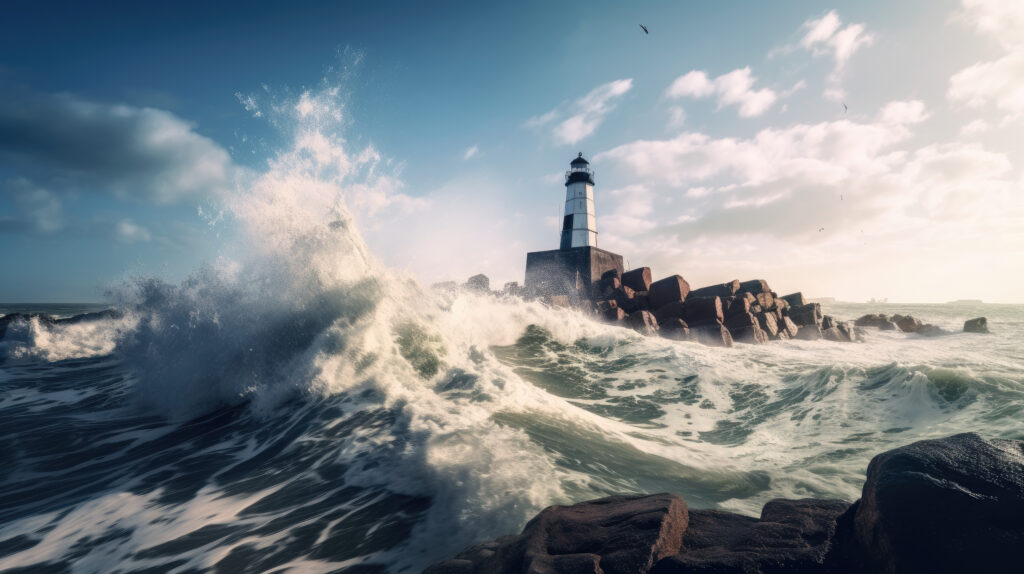
The lighthouse keeper’s house at Portland Head Light was dark except for a single lamp in the upstairs window. It was February, a Tuesday, and I was the only person in the parking lot at Fort Williams Park. The lighthouse itself, white tower against a pewter sky, the surf throwing spray across the rocks below, looked exactly the way you want a New England lighthouse to look in winter. No tour bus. No selfie sticks. Just stone, light, and salt air.
America’s lighthouses are some of its most photographed landmarks, and most people visit them in summer. That is a mistake. Winter strips away the crowds and the pleasant-weather sameness, replacing them with drama: ice-coated towers, storm surf, low-angle light, and the kind of moody atmosphere that makes you understand why these structures exist in the first place.
Portland Head Light, Cape Elizabeth, Maine
Commissioned by George Washington in 1791, Portland Head Light is the oldest lighthouse in Maine and arguably the most photographed in America. The tower and keeper’s quarters sit on a rocky headland in Fort Williams Park, which is open year-round, dawn to dusk. Free admission. The museum inside the keeper’s quarters is typically closed in winter (usually open late May through October), but the grounds, cliffs, and exterior views are accessible and uncrowded.
Winter photography here is exceptional. Northeast storms drive massive surf against the rocks below the tower, and the low winter sun creates long shadows across the snow-dusted grounds. The town of Cape Elizabeth is 15 minutes from downtown Portland, making it easy to combine with a Portland food and brewery visit.
Cape Hatteras Lighthouse, Outer Banks, North Carolina
At 198.5 feet, Cape Hatteras is the tallest brick lighthouse in the United States. The iconic black-and-white spiral-striped tower dominates the flat Outer Banks landscape. Tower climbs (257 steps) are seasonal and typically closed in winter, but the grounds and beach access at Cape Hatteras National Seashore are open year-round. Free.
Winter on the Outer Banks is a different world. The population drops from peak summer’s hundreds of thousands to a handful of year-round residents. Rental houses that cost $5,000 per week in July go for $800 in January. The fishing villages of Buxton and Hatteras remain open with a few restaurants and the kind of quiet that lets you hear the Atlantic from a mile away.
Split Rock Lighthouse, Two Harbors, Minnesota
Split Rock sits 130 feet above Lake Superior on a sheer cliff face, built in 1910 after a devastating storm wrecked 29 ships. The Minnesota Historical Society operates the site. Winter hours are limited (typically Friday through Sunday, 11 AM to 4 PM, November through May), and the tower and fog signal building may be closed during the coldest months. Grounds access is available year-round via the trail from the parking lot. Admission about $12 adults.
The real winter draw is the setting. Lake Superior does not freeze completely, and winter storms send 20-foot waves crashing against the cliff base. Ice formations build on the shoreline rocks. The lighthouse, perched on its volcanic cliff, looks like it belongs in a Nordic painting. The Superior Hiking Trail, accessible from the park, offers snowshoeing with lake views.
Point Reyes Lighthouse, Point Reyes, California
Point Reyes Lighthouse, built in 1870, sits at the windiest point on the Pacific Coast and one of the foggiest spots in North America. Reaching it requires descending 308 steps down the cliff face (and climbing back up). The lighthouse is typically open Friday through Monday, 10 AM to 4:30 PM, but check the Point Reyes National Seashore website as weather closures are common.
Winter is the prime season here. December through March brings gray whale migration right past the headland (30+ whales per hour on peak days), and the elephant seal colony at nearby Drakes Beach reaches its pupping peak in January. The combination of whales, seals, and the dramatic lighthouse perched above the Pacific makes this a singular winter destination. Park entry is free.
St. Augustine Lighthouse, St. Augustine, Florida
The St. Augustine Lighthouse, built in 1874, rises 165 feet above Florida’s oldest city. Unlike most historic lighthouses, this one is open for tower climbs year-round: 219 steps to the top for panoramic views of the Intracoastal Waterway, the Atlantic, and St. Augustine’s colonial district. Admission approximately $17 for adults, $15 for seniors. Open daily 9 AM to 6 PM.
Winter in St. Augustine means pleasant temperatures (highs in the 60s to low 70s) and the Nights of Lights celebration from mid-November through January 31, when the colonial district is illuminated with over 3 million white lights. The lighthouse itself is lit, and the view from the top after dark during Nights of Lights is worth the climb alone.
Heceta Head Lighthouse, Florence, Oregon
Heceta Head is considered the most photographed lighthouse on the Oregon coast, and winter is when it earns that reputation. Storm watching season (November through March) sends massive Pacific swells against the headland. The lighthouse sits 205 feet above the ocean on a cliff that is accessible via a half-mile trail from the parking area on Highway 101. Free to visit.
The keeper’s house has been converted into the Heceta Head Lighthouse Bed and Breakfast, one of the most unique lodgings in the Pacific Northwest. Rates in winter start around $209 to $369 per night, including a seven-course breakfast. The lighthouse beam, visible 21 miles out to sea, is the strongest on the Oregon coast. Watching it sweep across the fog from the keeper’s porch at night is the kind of experience you tell people about for years.
Marblehead Lighthouse, Marblehead, Ohio
The oldest continuously operating lighthouse on the Great Lakes, Marblehead has stood on the rocky shore of Lake Erie since 1822. The tower is typically closed for tours in winter, but the grounds at Marblehead Lighthouse State Park are open year-round. Free. Winter brings dramatic ice formations along the Lake Erie shoreline, and on the coldest days, the lighthouse and its rocky point become encased in spray ice, creating surreal frozen landscapes that draw photographers from across the Midwest.
Montauk Point Lighthouse, Montauk, New York
Commissioned by George Washington in 1796, Montauk Point is the oldest lighthouse in New York State. It stands at the easternmost tip of Long Island, where the Atlantic meets Block Island Sound. The museum is open year-round on weekends (plus some weekdays; check montauklighthouse.com). Admission about $14 adults. Tower climbs available when weather permits.
Winter strips the Hamptons pretension from Montauk and leaves a windswept fishing village with excellent seafood and empty beaches. Harbor seals haul out on rocks near the lighthouse from November through April, visible from the bluffs. Duryea’s Lobster Deck closes for the season, but Gosman’s Fish Market and the Montauk Brewing Company keep winter visitors fed and warmed.
Frequently Asked Questions
Are lighthouses open to visitors in winter?
Grounds are almost always accessible year-round. Tower climbs and museum interiors vary. St. Augustine is open year-round for climbs. Portland Head Light, Split Rock, and Cape Hatteras close their interiors seasonally. Always check individual lighthouse websites before making the drive, as winter weather can cause unexpected closures.
What is the best lighthouse for winter photography?
Portland Head Light in Maine and Split Rock in Minnesota offer the most dramatic winter conditions: ice, snow, storm surf, and moody skies. Point Reyes is best combined with whale watching. Heceta Head in Oregon is ideal for storm photography. St. Augustine is best for warm-weather winter shooting with the Nights of Lights.
Can you stay overnight at a lighthouse?
Yes. Heceta Head Lighthouse B&B in Oregon is the premier option, operating inside the restored keeper’s house with ocean views and included breakfast. Several other lighthouse keeper’s quarters around the country have been converted to vacation rentals. Search ‘lighthouse stays’ on recreation.gov for NPS-managed options.